
Hoboken and the surrounding Hudson County area
Mold Removal in Hoboken and Hudson County
Get the moldy material out under containment, the water source dealt with and the room put back, priced against a scope that was written by somebody who was not selling the demolition.
Mold Removal quote
Four things get us most of the way: the room, what the wet surface is made of, where the water came in, and how many units are in the building. Send those and we can usually say whether you are looking at a contract or a Saturday.
Would you rather talk it through? Call (315) 640-3590, answered 24/7.
$100 off your first job
Credited by us on your first booked job.
- One credit per customer per property, on your first booked job.
- Valid through December 31, 2026.
Mention this offer when you book. Full terms.
What comes out, what gets cleaned, and who closes the wall
Removal is the stage where walls come open, so the thing worth getting right is the scope before anyone picks up a saw. The work itself is containment and negative air, taking out the porous material that cannot be cleaned, HEPA vacuuming and wiping what stays, drying the cavity to a number, then rebuilding. The EPA is plain about why the demolition is there: absorbent and porous materials may have to be thrown away, because mold grows into the empty spaces and crevices of porous material and can be difficult or impossible to remove completely. That is why an honest quote for a wet basement has disposal in it and a cheap one does not. Two credentials matter here and they are not the same credential. The rebuild half is home improvement work and has sat under the New Jersey State Board of Home Improvement and Home Elevation Contractors since licensing took effect on February 1, 2026. The mold half has no state license at all. Ask the contractor closing the wall for the license, and the one opening it for the training records.
- Containment of the work area with sheeting and negative air, so the rest of the home is not seeded while the wall is open
- Controlled removal and bagging of porous material that cannot be cleaned: drywall, insulation, carpet and pad, particle board, ceiling tile
- HEPA vacuuming and detail cleaning of the framing, masonry and hard surfaces that stay
- Antimicrobial treatment where it is warranted, applied to material that has already been cleaned rather than sprayed over live growth
- Drying the opened cavity to a measured target before anything is closed up
- The additional assessment, cleaning and decontamination steps the state describes for water that contained sewage
- Notice to the local enforcing agency where the construction code requires it before the wall comes out
- Repair of the leak, drain or condensation problem that fed it, arranged with the trade that owns it
- Rebuild: insulation, drywall, tape, paint and trim, by a contractor licensed for home improvement work
- Independent verification afterwards, arranged with a company that had no part in the removal
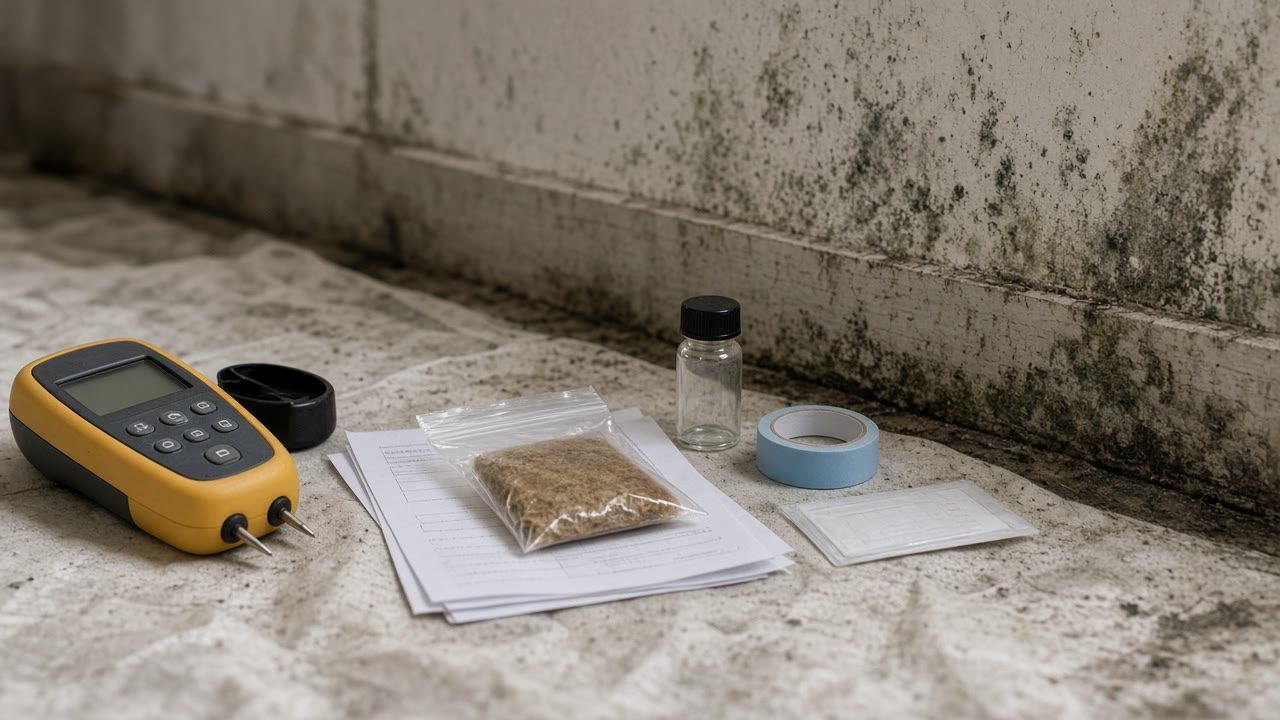
What moves the price and the day count on a Hoboken removal
The scope is settled before the first cut: by what the soaked material is made of, by what was in the water, and by what your building's unit count obliges anyone to do before a partition comes out.
What the wet material is made of
The EPA states that absorbent or porous materials may have to be thrown away because mold can grow into their crevices and be impossible to remove completely. Tile on masonry gets cleaned in place. Drywall, carpet pad and batt insulation get bagged and carried out, and that is a different price, a different crew and a different number of days.
Where the water came from
The Department of Health says that where the water contained sewage or other hazardous substances, additional steps are required to assess, clean and decontaminate the area. Water that came back up a floor drain in a combined sewer town is grossly contaminated by definition under the industry water damage standard, whatever it looked like coming in, and that single fact decides whether the drywall is dried or removed.
How many units are in the building
In a one or two family house, replacing interior finish over less than 25 percent of the wall area counts as ordinary maintenance under the state construction code: no permit, no inspection, no notice. In anything larger, taking out a non structural partition is minor work, and the local enforcing agency must be notified before the job starts with a permit application filed within five business days. About 93 percent of Hoboken homes are in buildings of three or more units, so the notice is the normal case here, not the exception.
Who else owns the wet wall
Only 372 of this city's housing units sit in detached single family houses. Nearly everything else shares a party wall, a riser or a common element, so if the wet material crosses into one, the association or the landlord is a party to the work rather than an audience for it. That is a scheduling question before it is a cost question.
How big the affected area actually measures
The Department of Health puts anything over about 100 square feet with a contractor experienced in mold or environmental contamination cleanup, anything under about 10 square feet within reach of a homeowner, and asks for a professional opinion in between. The measurement is what the containment, the crew and the disposal are built from, which is why it belongs in the assessment and not in the quote.
Whether the water source has been fixed yet
Removal into a building that is still getting wet is money spent twice. The order is water, then material, then rebuild, and a contractor willing to skip straight to the demolition is telling you something about the quote.
How the work gets in and out
A fourth floor walk-up with a shared stair, no loading access and street parking is a different removal from a ground floor unit with a door onto the sidewalk. Where the bags go, where the machines sit and where the dust barrier ends get worked out before a price means anything.
What is behind the finish in an older building
Almost a third of Hoboken units were built in 1939 or earlier, and the City records that 80 percent of the city flooded in 2012. In a building that has not been opened up since then there can be an older moisture history behind the plaster, and what is found when the wall comes open can move the scope.
Find out whether the drywall has to come out at all
Where the water came from is what decides it. Describe the room and the source, and we will tell you which job this is, with no obligation either way.
The order the work runs in, water first
Start from a scope somebody else wrote
The measurements, photographs and method come from the assessment, not from the crew that gets paid to carry it out. The Department of Health recommends that split in writing, and in a state that registers nobody for mold work it is the only real check there is on a scope.
Deal with the water first, or date it in the schedule
Parapet, roof, riser, seal, drain or condensation. Until the repair is done or booked, the removal is a holding action, and everyone involved should be able to say which it is.
Give notice, then set the containment
In a building of three or more units the local enforcing agency has to be told before a partition comes out, with the permit application filed within five business days. Then sheeting, negative air and a covered route out. That notice is also a paper trail a tenant or a board can point to later.
Take out what cannot be cleaned
Porous material is bagged inside containment and carried out. Drywall is cut back past the wet line found with a meter, not to the edge of the stain, because the stain is smaller than the water almost every time.
Clean what stays, then dry it
HEPA vacuum and wipe the framing, masonry and hard surfaces, then dry the open cavity to a measured target. Where the water contained sewage, the extra decontamination steps the state describes belong at this point and should appear on the invoice as their own line.
Read the rebuild contract before you sign it
New Jersey gives a consumer until midnight of the third business day after receiving a copy of a home improvement contract to cancel it for any reason, by written notice delivered in person or sent by registered mail with a return receipt, with all money refunded within 30 days. Signing a demolition and rebuild under pressure in a wet basement is common. So is the right to get back out of it.
Rebuild
Insulation, drywall, finish and trim by a contractor licensed for home improvement work, sequenced after the drying readings rather than alongside them. Closing a wall on damp framing is how a job gets done twice.
Verify with a company that did not do the removal
New readings, photographs of the opened cavity, and a written statement that what was done matches what was scoped. The Department of Health warns residents that no building can be kept permanently free of mold and to avoid any contractor claiming otherwise, so the deliverable is a record of moisture corrected and material removed.
Mold Removal work we have arranged
What mold removal looks like
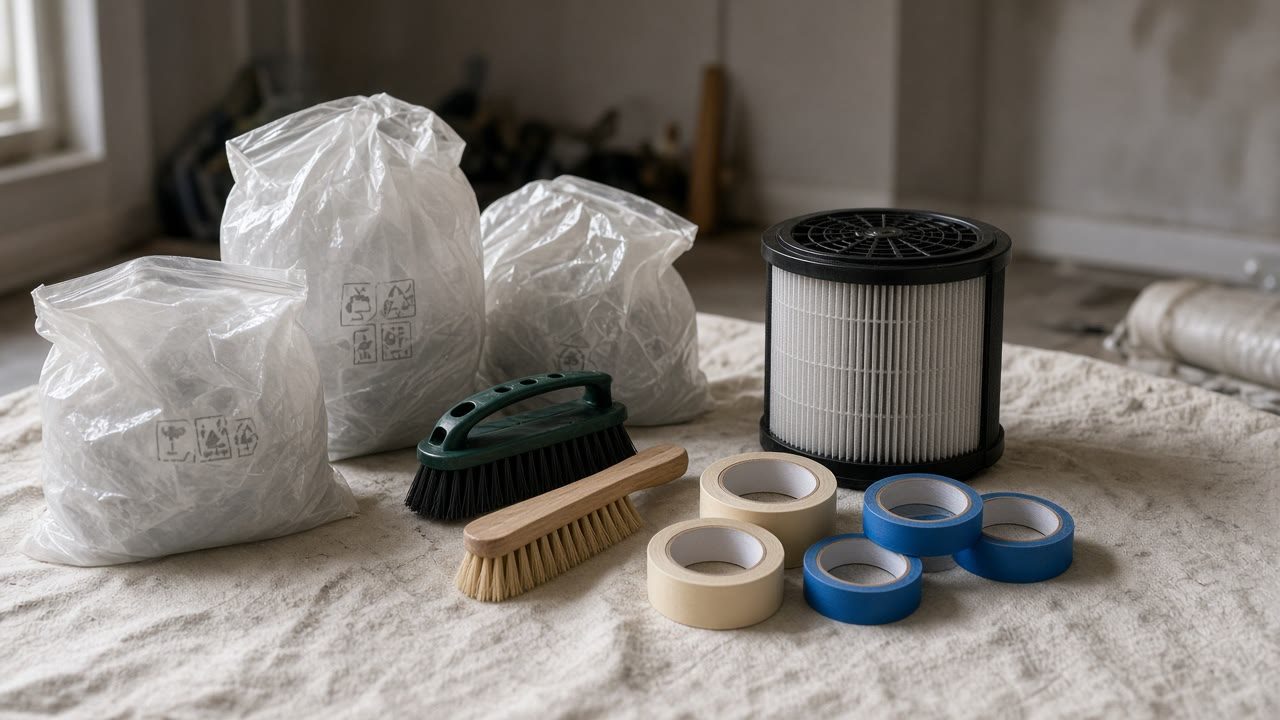

Where a removal stops, and when you do not need one
When you may not need this at all
- Under about 10 square feet, roughly a three foot square, the Department of Health puts the cleanup within reach of a homeowner or building maintenance staff. New Jersey requires no license to do it, so for a patch behind a radiator the answer is often detergent, a respirator and a Saturday.
- If the material is hard and non porous, tile, sealed concrete, masonry or metal, it is normally cleaned in place. Mold on bathroom tile is not a demolition job and nothing has to come out.
- If it keeps coming back in the same spot, removal on its own will not hold it. The repair to the leak, the drain or the condensation is the actual job, and the removal is the tidying up afterwards.
- If a landlord or a condo association is responsible for the wall, get the assessment written and the notice served before you pay for any removal yourself. Paying first can cost you the remedy you were entitled to.
- If the pitch is that your home will be left with no mold in it at all, the Department of Health names that as a claim to walk away from: no building can be kept permanently free of it, and judging a quote on that promise instead of on the moisture repair and the containment is how people overpay.
What is out of scope
- Testing and post-removal verification. Those stay with a different company, which is the arrangement the state health department recommends and the one this site is built around.
- Asbestos and lead abatement, separately licensed disciplines with their own notification rules, which come before demolition in older housing.
- Structural repair, underpinning and foundation work.
- Insurance claim handling or negotiation with an adjuster.
- Any promise about health, symptoms or air quality after the work is finished.
- Cleaning contents, clothing and soft furnishings, which is a separate trade and is priced in its own right.
Hudson County towns where we arrange removals
What people ask before signing a removal contract
Will the company that tested my home be doing the removal?
No. We arrange the two as separate engagements with different companies. New Jersey does not require that, which is exactly why it has to be arranged: no mold assessor or remediator credential is issued by this state, and the Department of Health's own firms list carries a standing warning that, due to a potential conflict of interest, the company conducting your assessment should not be the company conducting the remediation. A bill in front of the Legislature would make the split a legal requirement and it is still sitting in its first committee, so today it is a choice, and it is ours.
Does the drywall really have to come out, or can it be dried?
It depends entirely on what the water was. Clean water caught early can often be dried in place. Water that came back up a basement floor drain is Category 3 under the industry water damage standard, defined as grossly contaminated and including waste line backflows from beyond any trap, regardless of visible content or color. The EPA adds that porous material may have to be thrown away because mold grows into its crevices, and the Department of Health says water containing sewage calls for extra assessment, cleaning and decontamination. That is the difference between a drying invoice and a demolition invoice, and it is decided on day one, not day five.
Do I need a permit to take a wall out?
It depends on the building. In a one or two family dwelling, installing, repairing or replacing interior finish across less than 25 percent of the wall area, drywall and plaster included, is ordinary maintenance under the state construction code, and no permit, inspection or notice is required. In anything with more units, replacing a non structural partition with no reconfiguration of space is minor work: no permit before starting, but the enforcing agency must be notified before work begins and a permit application filed within five business days. Since about 93 percent of Hoboken homes are in buildings of three or more units, most jobs here need the notice.
How do I know a removal quote is not inflated?
Read it against a scope that somebody else measured. A written scope names the areas, the quantities, the method for each area and the containment, and a quote that will not itemize against it is quoting something other than what was found. That check matters more here than in most states, because New Jersey vets nobody before the van arrives, and the bill in front of the Legislature that would bar one contractor from both inspecting and remediating the same premises is still in committee.
I signed something. Can I get out of it?
Possibly. New Jersey law gives a consumer the right to cancel a home improvement contract for any reason before midnight of the third business day after receiving a copy of it. The notice has to be in writing and either delivered in person or sent by registered mail with a return receipt requested, and all money must be refunded within 30 days. Put it in writing and send it the way the statute requires rather than by phone.
Will it come back?
If the water that fed it is still arriving, yes, and no amount of cleaning changes that. The Department of Health tells residents plainly that a building cannot be made permanently free of mold and to be wary of any contractor promising otherwise. Judge a job on the moisture repair, the containment and the verification record, because those are the parts that decide whether you see it again.
Tell us what the water did
Enough to confirm the sequence, and who has to be notified before anything gets cut.