
What Changes the Price of a Mold Job in North Jersey
Six things move the number more than anything else: where the water came from, how much material is affected, whether porous material has to leave the building, how hard the space is to work in, how much rebuilding follows, and whether testing was needed at all. Nobody can give you a real figure before somebody has looked, and any quote that arrives without those six answers is describing a different job from the one next to it.
Already know you need someone out? Call (315) 640-3590, answered 24/7.
Where the water came from moves it most
Clean water from a supply line and dirty water from a floor drain are two different jobs at two different prices, and that is not a negotiating position. The ANSI/IICRC S500 standard defines Category 3 water as grossly contaminated water that can contain pathogenic, toxigenic or other harmful agents, with examples including sewage and waste line backflows originating from beyond any trap, regardless of visible content or color. The Department of Health adds that where the water contained sewage or other hazardous substances, additional steps are required to assess, clean and decontaminate the area. Containment, protective equipment, disposal and a verification step all attach to that single determination. If a quote for a drain backup looks much like a quote for a dishwasher leak, somebody has priced the wrong job and it will be found out mid week.
How much area, measured the way the state measures it
Affected square footage is the second lever, and there are recognized break points. The Department of Health booklet says areas under about 10 square feet may be handled by a homeowner or building maintenance staff, areas over about 100 square feet call for a qualified contractor experienced in mold or environmental contamination cleanup, and a professional opinion should be sought for anything in between. Those thresholds are also roughly where the cost structure steps up, because a small patch needs no containment, no negative pressure and no disposal run, while a large one needs all three. So when you compare quotes, compare the square footage each one assumed before you compare the totals. Two very different numbers for the same basement usually mean two different areas, not one generous company.
Whether the porous material leaves the building
This is where a bill doubles. The EPA states that absorbent or porous materials such as ceiling tiles and carpet may have to be thrown away if they become moldy, because mold can grow into the empty spaces and crevices of porous material and may be difficult or impossible to remove completely. Drywall, insulation, carpet, pad and particle board all sit in that group. Removal means demolition labor, bagging, a disposal run and then replacement, which is a second trade entirely. Drying in place means equipment and time and nothing else. The EPA also states that water damaged areas should be dried within 24 to 48 hours to prevent growth, so the hours immediately after the water arrived are what decide which of those two jobs you end up buying. Nothing you do later is as cheap as drying it the afternoon it happened.
Access, stairs and a garden level in a walk-up
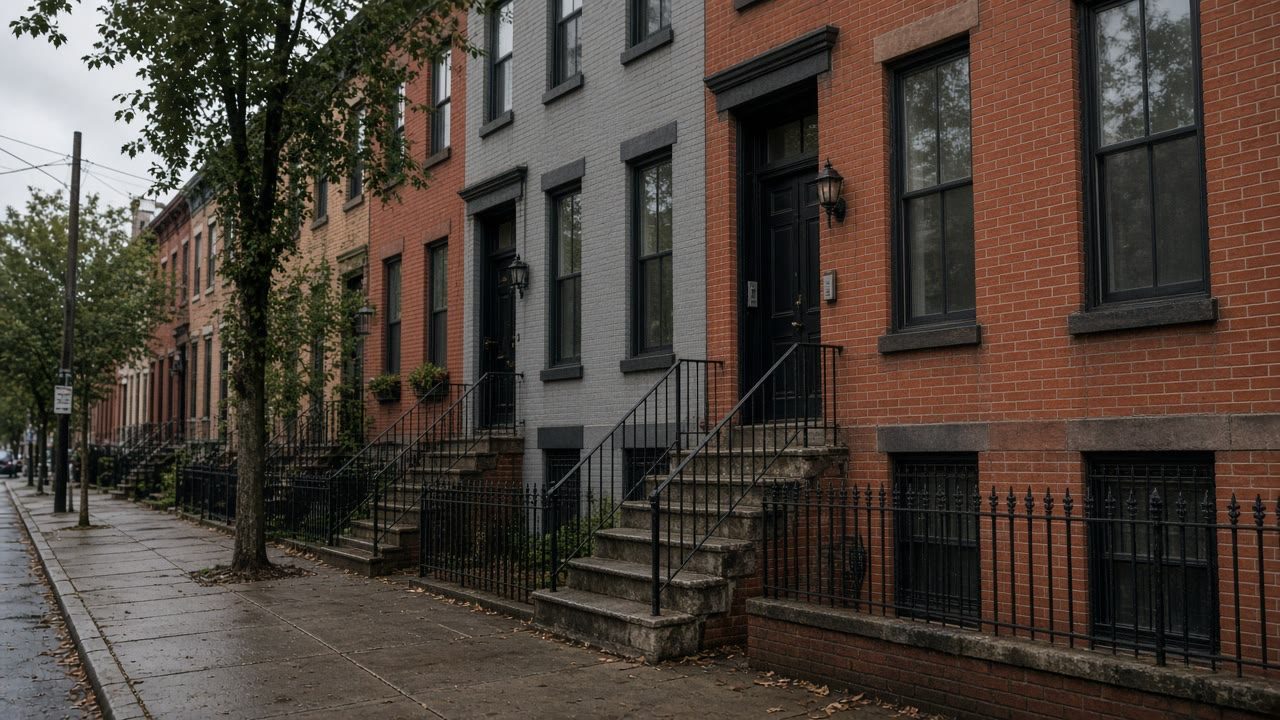
Two identical basements can cost different amounts purely because of the route to the street. In Hoboken 28,058 units, about 93 percent of the housing, sit in buildings of three or more units, including 10,445 in buildings of 50 or more, which means a great deal of this work happens through a shared entrance, along a common hallway, up or down a narrow stair, with a building manager to satisfy and possibly an elevator to book. Every bag of wet drywall is carried by hand, protection goes down over common floors, and hours land on the invoice that have nothing to do with mold. When you ask for a price, say which floor it is on, whether there is an elevator, and how close a truck can park.
Putting the room back is a separate trade with its own license
The removal ends with a clean cavity, not a finished room, and the second half is priced separately for a reason. Rebuilding is home improvement work: the Home Improvement and Home Elevation Contractor Licensing Act, P.L.2023 c.237, approved on January 8, 2024, creates the New Jersey State Board of Home Improvement and Home Elevation Contractors, with its licensing, education and examination sections taking effect on February 1, 2026. So ask every quote to separate the remediation scope from the reinstatement scope, and ask who holds the license for the second one. A single lump figure hides which half is which, makes comparison between bidders impossible, and tends to be exactly where the margin is sitting.
Permits and notices, and when there is nothing to pay for
Some quotes carry a permit line that should not be there. New Jersey's Uniform Construction Code at N.J.A.C. 5:23-2.7 treats installation, repair or replacement of interior finishes covering less than 25 percent of the wall area in a one or two family dwelling, plastering and drywall included, as ordinary maintenance for which no permit, inspection or notice to the enforcing agency is required. In buildings other than one and two family dwellings, N.J.A.C. 5:23-2.17A classifies repair or replacement of a non structural component such as a partition, with no reconfiguration of space, as minor work: no permit before work starts, but the local enforcing agency must be notified beforehand and a permit application filed within five business days. In an apartment building that notice is also a paper trail worth having later.
Testing as a line item, and the one question to ask about it
Sampling is often the first thing on a quote and the easiest thing to question. The Department of Health booklet states that if a visual inspection reveals the presence of mold, additional testing is not necessary, and that resources are better used correcting the moisture problem and cleaning up the contamination. The EPA states that in most cases sampling is unnecessary where growth is visible, and that because no federal limits have been set for mold or mold spores, sampling cannot be used to check a building against any federal standard. That does not make every test a waste: a before and after pair in a shared building, or a search for a source you can smell but cannot see, both earn their keep. It makes an unexplained test worth one question, which is what the result would change.
The contract you signed standing in a wet basement
You have three business days. New Jersey law gives a consumer the right to cancel a home improvement contract for any reason before midnight of the third business day after receiving a copy of it, by written notice sent by registered mail with a return receipt requested or delivered in person, with all money refunded within 30 days. People sign these agreements at the worst possible moment, with water on the floor, a van outside and somebody explaining what is behind the wall. That right exists for exactly that situation. If the figure is larger than you expected, or nobody has explained the water category or the square footage behind it, put the cancellation in writing, send it the way the statute requires, and get a scope written by someone who is not bidding the work.
When the right number is nothing at all
Some of what looks like a job is not one, and saying so costs us a quote we did not deserve. A patch under about 10 square feet on a painted surface falls inside the range the Department of Health says a homeowner or building maintenance staff may handle. A fine even bloom on cool masonry in July is usually condensation rather than a leak, since the normal dew point at Newark Liberty sits between about 62 and 64 degrees Fahrenheit through the middle of the day in summer, so any surface below that temperature makes its own water. A dehumidifier with a drain line, better air movement and a cheap moisture meter beat a contract in that situation. If it keeps returning, covers more than a small area, or followed water that came up a drain rather than down a wall, that is the moment to get a written scope. Tell us what you are looking at and we will say which of the two it sounds like.
Sources used in this guide

The ANSI/IICRC S500 standard for professional water damage restoration defines Category 3 water as grossly contaminated water that can contain pathogenic, toxigenic or other harmful agents, and its examples include sewage and waste line backflows that originate from beyond any trap, regardless of visible content or color.
Source: ANSI/IICRC S500 Consensus Body position statement, March 16, 2026, accessed 2026-09-20
The Department of Health booklet states that if the water that caused the mold contained sewage or other hazardous substances, additional steps are required to assess, clean and decontaminate the area.
Source: New Jersey Department of Health, Consumer, Environmental and Occupational Health Service, accessed 2026-09-20
The Department of Health booklet says areas under about 10 square feet may be handled by a homeowner or building maintenance staff, areas over about 100 square feet call for a qualified contractor experienced in mold or environmental contamination cleanup, and a professional opinion should be sought for anything between the two.
Source: New Jersey Department of Health, Consumer, Environmental and Occupational Health Service, accessed 2026-09-20
The EPA states that absorbent or porous materials such as ceiling tiles and carpet may have to be thrown away if they become moldy, because mold can grow into the empty spaces and crevices of porous material and may be difficult or impossible to remove completely.
Source: United States Environmental Protection Agency, accessed 2026-09-20
The EPA states that water damaged areas and items should be dried within 24 to 48 hours to prevent mold growth, and that if wet or damp materials are dried within 24 to 48 hours of a leak or spill, in most cases mold will not grow.
Source: United States Environmental Protection Agency, accessed 2026-09-20
In Hoboken, 372 housing units are in single family detached houses, 870 in single family attached houses and 959 in two unit buildings. The remaining 28,058 units, about 93 percent of the city's housing, sit in buildings of three or more units, including 10,445 in buildings of 50 units or more.
Source: U.S. Census Bureau, American Community Survey 2020-2024 5-year estimates, accessed 2026-09-20
The Home Improvement and Home Elevation Contractor Licensing Act, P.L.2023 c.237, was approved on January 8, 2024. It creates the New Jersey State Board of Home Improvement and Home Elevation Contractors, and its licensing, education and examination sections take effect on the first day of the twenty fifth month after enactment, which is February 1, 2026.
Source: New Jersey Legislature, P.L.2023 c.237 as enacted, accessed 2026-09-20
New Jersey's Uniform Construction Code rules at N.J.A.C. 5:23-2.7 treat installation, repair or replacement of interior finishes covering less than 25 percent of the wall area in a one or two family dwelling, including plastering and drywall, as ordinary maintenance for which no permit, inspection or notice to the enforcing agency is required.
Source: New Jersey Department of Community Affairs, Division of Codes and Standards, N.J.A.C. 5:23, accessed 2026-09-20
In buildings other than one and two family dwellings, N.J.A.C. 5:23-2.17A classifies repair or replacement of a non structural component such as a partition, with no reconfiguration of space, as minor work: no permit is needed before the work starts, but the owner or contractor must give the local enforcing agency notice before work begins and file a permit application within five business days.
Source: New Jersey Department of Community Affairs, Division of Codes and Standards, N.J.A.C. 5:23, accessed 2026-09-20
The Department of Health booklet states that if a visual inspection reveals the presence of mold, additional testing is not necessary, and that resources are better used correcting the moisture problem and cleaning up the contamination.
Source: New Jersey Department of Health, Consumer, Environmental and Occupational Health Service, accessed 2026-09-20
The EPA states that in most cases, if visible mold growth is present, sampling is unnecessary, and that because no EPA or other federal limits have been set for mold or mold spores, sampling cannot be used to check a building's compliance with federal mold standards.
Source: United States Environmental Protection Agency, accessed 2026-09-20
New Jersey law gives a consumer the right to cancel a home improvement contract for any reason before midnight of the third business day after receiving a copy of it, by written notice sent by registered mail with a return receipt requested, or delivered in person, with all money refunded within 30 days.
Source: New Jersey Legislature, P.L.2023 c.237 as enacted, amending C.56:8-151, accessed 2026-09-20
At Newark Liberty International Airport, the closest first order weather station to Hudson County, the NOAA hourly climate normal dew point on July 15 stays between about 62 and 64 degrees Fahrenheit for every hour of the day, and on August 15 it averages 63.2 degrees.
Source: NOAA National Centers for Environmental Information, 1991-2020 hourly climate normals, accessed 2026-09-20
Services this guide relates to
Need someone to look at it?
Send the details and we will come back to you.