
Mold Removal in Jersey City, and the Offices That Sign Off
Before the saw comes out, two offices matter: the one that has to be told about the wall, and the one that owns the pipe. They are not the same office.
Mold Removal quote in Jersey City
Describe the patch, the smell, and whether the water came up from below or in from outside. That much usually settles which trade this needs, whether it is small enough to handle yourself, and who should be paying for it.
Would you rather talk it through? Call (315) 640-3590, answered 24/7.
$100 off your first job
Credited by us on your first booked job.
- One credit per customer per property, on your first booked job.
- Valid through December 31, 2026.
Mention this offer when you book. Full terms.
Sequencing a Jersey City removal so it is not done twice
Put the water first in the schedule or expect to pay for the drywall twice. If the source is the combined line, the JCMUA owns the main and you own the lateral, and which side of that boundary the fault sits on decides whether you are waiting on a utility or booking a plumber this week. If the source is hillside groundwater against a stone foundation up on the Heights, no amount of removal holds without the grading and the drainage. Only once the water has a date in the schedule is the demolition worth buying, and the porous material is going out regardless: mold grows into the crevices of drywall, insulation and carpet pad and cannot reliably be taken back out.
Whether the fault is on the main or on your lateral
The JCMUA holds 21 of the 22 outfall permits in this city. The main is theirs, the lateral is yours, and the answer decides who you are waiting on.
How many units share the building
Above two units, the enforcing agency is notified before the partition comes out and the application follows within five business days.
What actually has to leave the room
Tile, masonry and sealed concrete are cleaned in place. Drywall, batt and pad are bagged, and the disposal belongs on the quote as its own line.
The authorities behind a Jersey City sewer backup

The Jersey City Municipal Utilities Authority states that Jersey City operates on a combined sewer system, in which one pipe collects both stormwater entering through street catch basins and household wastewater.
Source: Jersey City Municipal Utilities Authority, accessed 2026-09-20
The state combined sewer outfall inventory lists 22 active outfalls inside Jersey City, 21 permitted to the Jersey City Municipal Utilities Authority and one to the North Hudson Sewerage Authority Adams Street plant. That is the second largest count in the metro after Bayonne.
Source: New Jersey Department of Environmental Protection, NJPDES Combined Sewer Overflow data layer, accessed 2026-09-20
In buildings other than one and two family dwellings, N.J.A.C. 5:23-2.17A classifies repair or replacement of a non structural component such as a partition, with no reconfiguration of space, as minor work: no permit is needed before the work starts, but the owner or contractor must give the local enforcing agency notice before work begins and file a permit application within five business days.
Source: New Jersey Department of Community Affairs, Division of Codes and Standards, N.J.A.C. 5:23, accessed 2026-09-20
New Jersey's Uniform Construction Code rules at N.J.A.C. 5:23-2.7 treat installation, repair or replacement of interior finishes covering less than 25 percent of the wall area in a one or two family dwelling, including plastering and drywall, as ordinary maintenance for which no permit, inspection or notice to the enforcing agency is required.
Source: New Jersey Department of Community Affairs, Division of Codes and Standards, N.J.A.C. 5:23, accessed 2026-09-20
The EPA states that absorbent or porous materials such as ceiling tiles and carpet may have to be thrown away if they become moldy, because mold can grow into the empty spaces and crevices of porous material and may be difficult or impossible to remove completely.
Source: United States Environmental Protection Agency, accessed 2026-09-20
What mold removal involves in Jersey City
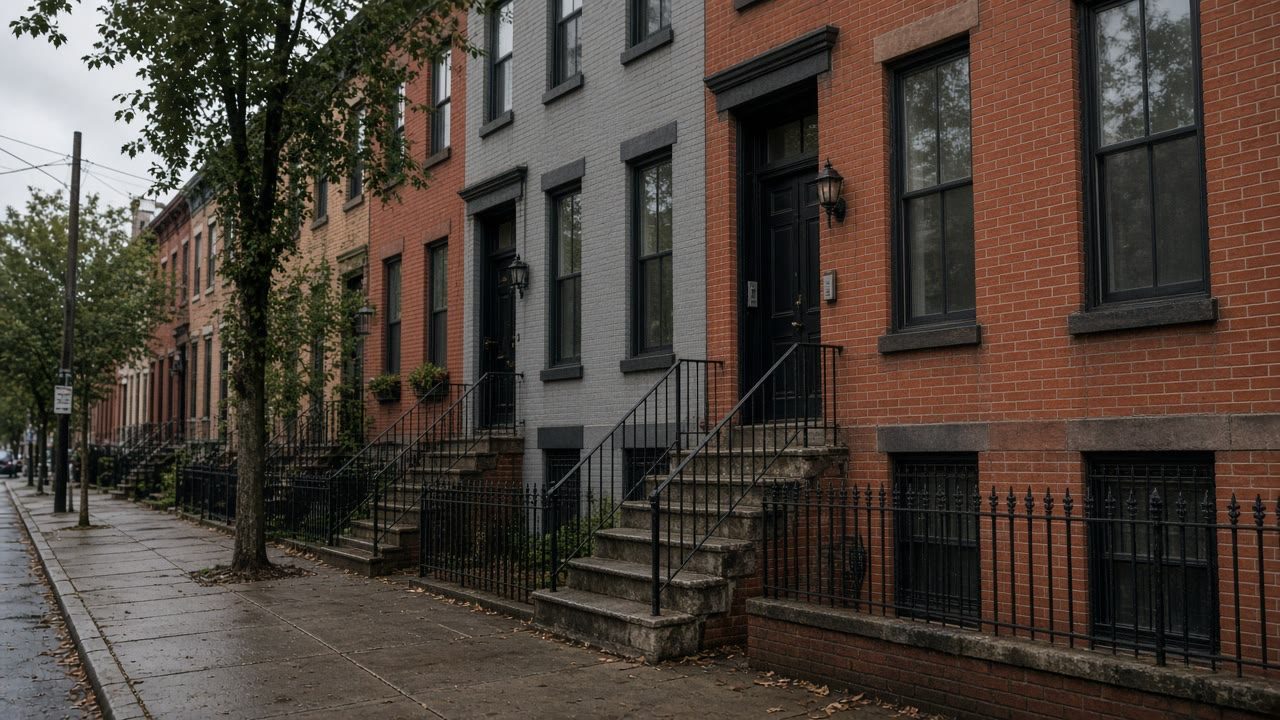
Who signs off a Jersey City removal, and who owns the pipe
Getting the wet material out of a Jersey City home is the straightforward half. The half that stalls jobs is the paperwork, and here it runs through bodies a neighbor across the city line will not name. The Jersey City Municipal Utilities Authority runs the combined system, holding 21 of the city's 22 outfall permits, so a surcharge complaint and any repair timetable belong to the JCMUA rather than to the authority covering Hoboken and Weehawken. The wall itself is a separate track: in anything above two units, the local enforcing agency is told before the partition comes out.
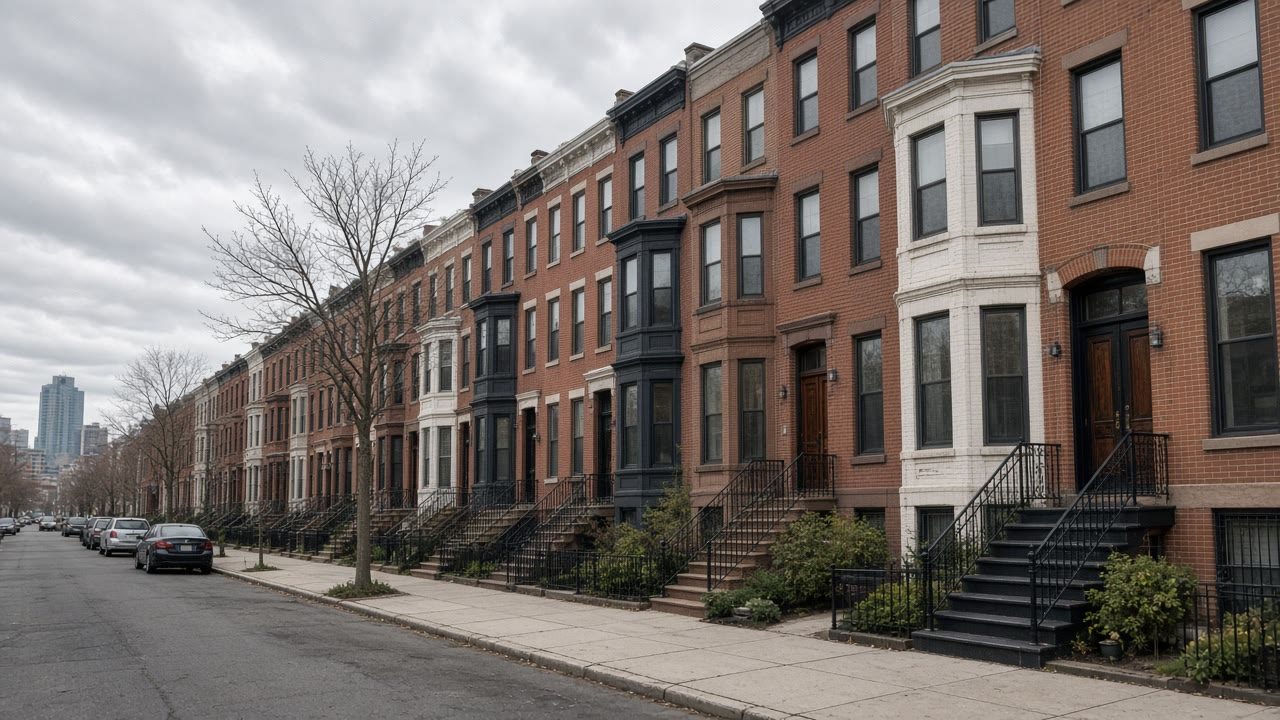
Waiting on the utility, or on a plumber?
Tell us where the water enters and we will say which side of the line the fault is likely on.
What Jersey City residents ask before the wall comes out
Who do I report a sewer backup to in Jersey City?
The Jersey City Municipal Utilities Authority, which runs the combined system here and holds 21 of the city's 22 outfall permits. That matters because the escalation route and the repair timetable are not the ones a friend in Hoboken or Weehawken will describe: those towns sit on a different authority's permit entirely.
Does a mold removal need a permit in a Jersey City brownstone?
It depends on the unit count. In a one or two family house, replacing interior finish across less than 25 percent of the wall area is ordinary maintenance under the state construction code, with no permit, inspection or notice. In a three unit building or a tower, taking out a non structural partition is minor work: the enforcing agency is told before work begins and the permit application is filed within five business days.
Send the room, the unit count and which slope you are on
That is enough to lay out the order of work and who has to be told before anything is cut.