
What a Mold Assessment Report Contains, and Who Reads It
A written record of what was found and where, how wet the materials are, where the water came from and what has to be done about it in what order, written by somebody who is not quoting for the removal. It is the document a landlord, a condo board, an adjuster, a code officer or a court will act on, which is usually the real reason to buy one.
Already know you need someone out? Call (315) 640-3590, answered 24/7.
The four things that belong in the document
A report worth its fee covers four things in order: what was observed and where, how wet the materials actually are, where the water came from, and what has to be done in what sequence. Moisture readings matter more than photographs, because a reading taken behind a baseboard is the part you cannot see and the part that decides whether a wall opens. The report should state the category of the water, since the ANSI/IICRC S500 standard defines Category 3 as grossly contaminated water whose examples include sewage and waste line backflows from beyond any trap, regardless of visible content or color, and that one call changes the entire scope. It should give the affected area in square feet, because the Department of Health thresholds are written in square feet: under about 10 for a homeowner, over about 100 for a qualified contractor, and a professional opinion for anything in between.
When a laboratory sample earns its fee, and when it does not
Ask what the result would change before agreeing to pay for it. The Department of Health booklet states that if a visual inspection reveals the presence of mold, additional testing is not necessary, and that resources are better used correcting the moisture problem and cleaning up the contamination. The EPA goes further: in most cases sampling is unnecessary where growth is visible, and because no federal limits have been set for mold or mold spores, sampling cannot be used to check a building against any federal standard. No number on a laboratory sheet can declare your home acceptable or unacceptable. Sampling earns its place when there is a smell and no visible source, when a shared building needs a before and after comparison, or when somebody is going to dispute the condition. Otherwise it is a line item that changes nothing.
Why the person writing it should not be bidding the work
The value of the document lies entirely in the independence of whoever wrote it. New Jersey has no State certification program for companies performing mold or general indoor air and environmental health services, so nothing external restrains a firm that finds a problem and then prices the cure. The Department of Health's own remediation firms list carries the warning in its header: due to a potential conflict of interest, the NJDOH strongly recommends that the company who conducts your environmental health assessment not be the same company who conducts the remediation. A report written by the party that profits from the scope it recommends is a sales document with measurements in it. A landlord's attorney knows that, an adjuster knows it, and a judge will be told.
For a landlord who has stopped replying
This is the commonest reason to commission one in this city. Before a New Jersey tenant can use repair and deduct, rent abatement, rent withholding or constructive eviction, the defect must be of a vital facility, the tenant must not have caused it, and the tenant must have notified the landlord and allowed adequate time to fix it, with the state advising written notice sent by a mail service that produces a return receipt. An independent report attached to that letter does two jobs at once: it converts a disagreement about whether there is a problem into a description of one, and it dates the condition. Marini v. Ireland authorized repair and deduct in this state and the bulletin sets no dollar cap, but a deduction you may later have to justify is far easier to justify with a third party report behind it.
For a condo board, a party wall or a common element
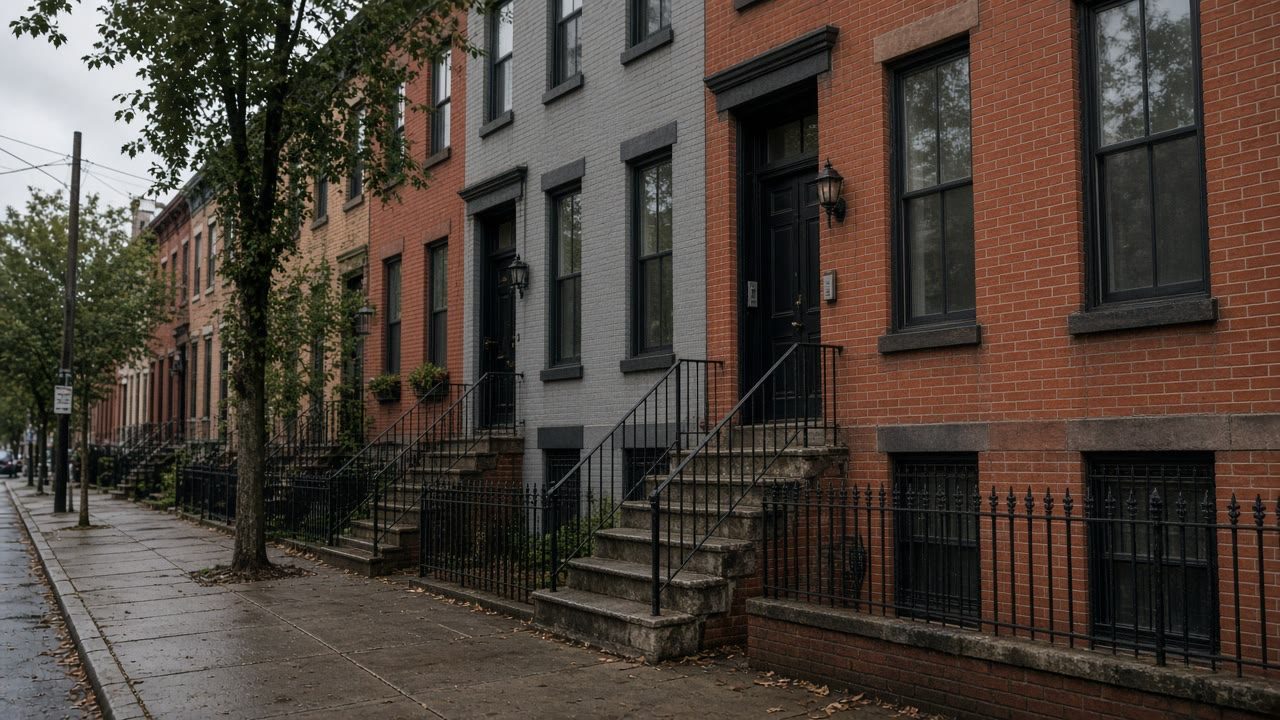
In Hoboken the wet wall is usually not solely yours. Of the city's housing, 372 units are in single family detached houses, 870 in single family attached and 959 in two unit buildings, while the remaining 28,058 units, about 93 percent, sit in buildings of three or more, including 10,445 in buildings of 50 units or more. The riser behind your kitchen, the party wall and the roof above you belong to somebody else more often than not, and a board being asked to spend shared money needs a document it can put into its minutes. A report identifying the source as a common element is the difference between a serious discussion about a repair and an argument between neighbors about a stain.
For a code officer or the state housing inspector
Route the document to whoever has power over the water. The Department of Health tells renters that because of the lack of mold regulations, government offices have little authority to cite building owners over mold contamination, and advises contacting the local building code office about unrepaired building leaks, which those offices can address as structural deficiencies such as leaks and plumbing faults. A report naming a failed roof drain, an open joint or a cracked waste line gives that officer something specific to write up. If the building holds three or more rental units it must also be registered with the state Bureau of Housing Inspection, the enforcement agency for housing code violations in those buildings, so the same document works at two separate doors.
For an adjuster, where how the water arrived is the whole question
The first question asked about damage is how the water got in, not what is growing on the wall, which is why a report that identifies a source is worth more than one that identifies a species. The local record shows how varied those sources are: of Hoboken's 2,216 paid federal flood insurance claims, totaling about 56.5 million dollars, 1,486 are coded as accumulation of rainfall or snowmelt and only 344 as tidal water overflow. Those are two different stories about the same square mile. A dated independent description of the source and its extent, written before demolition starts, is the version of events that still exists when somebody reviews the file weeks later. Once the wall is in a dumpster, what remains is your recollection and a pile of receipts.
For a buyer, a seller or a disclosure conversation
There are two housing stocks in this city and they fail in different ways, so a report is how you learn which one you are buying. The median year a Hoboken housing unit was built is 1977, which describes no real building here: 9,744 of 30,259 units, 32 percent, were built in 1939 or earlier, while 9,984 units, 33 percent, went up in 2000 or later. A prewar rowhouse and a waterfront tower from the mid 2000s have almost nothing in common behind the plaster. Add that the City records 80 percent of Hoboken flooded during Superstorm Sandy in October 2012, and a smooth finished basement wall with no visible problem becomes a perfectly reasonable thing to ask about before closing rather than after.
What a report should never promise, and what happens next
Be suspicious of certainty. The Department of Health booklet warns that a building cannot be made permanently free of mold and tells residents to avoid a contractor who claims otherwise, so a report or a quote offering a permanent outcome is telling you something about the company rather than about the building. What a good document ends with is a scope, a sequence and a verification step. The state's written advice is to consider using a different company for the testing than for the remediation, because the same company may present a conflict of interest that should be avoided, and that applies to the check at the end as much as to the look at the start. If you want it arranged that way, send us the details and we will keep the two halves in different hands.
Sources used in this guide

The ANSI/IICRC S500 standard for professional water damage restoration defines Category 3 water as grossly contaminated water that can contain pathogenic, toxigenic or other harmful agents, and its examples include sewage and waste line backflows that originate from beyond any trap, regardless of visible content or color.
Source: ANSI/IICRC S500 Consensus Body position statement, March 16, 2026, accessed 2026-09-20
The Department of Health booklet says areas under about 10 square feet may be handled by a homeowner or building maintenance staff, areas over about 100 square feet call for a qualified contractor experienced in mold or environmental contamination cleanup, and a professional opinion should be sought for anything between the two.
Source: New Jersey Department of Health, Consumer, Environmental and Occupational Health Service, accessed 2026-09-20
The Department of Health booklet states that if a visual inspection reveals the presence of mold, additional testing is not necessary, and that resources are better used correcting the moisture problem and cleaning up the contamination.
Source: New Jersey Department of Health, Consumer, Environmental and Occupational Health Service, accessed 2026-09-20
The EPA states that in most cases, if visible mold growth is present, sampling is unnecessary, and that because no EPA or other federal limits have been set for mold or mold spores, sampling cannot be used to check a building's compliance with federal mold standards.
Source: United States Environmental Protection Agency, accessed 2026-09-20
The New Jersey Department of Health states on its mold page that there are no State certification programs for companies performing mold or general indoor air and environmental health services.
Source: New Jersey Department of Health, Consumer, Environmental and Occupational Health Service, accessed 2026-09-20
The header of the Department of Health list of Indoor Environmental Remediation Firms reads: due to a potential conflict of interest, the NJDOH strongly recommends that the company who conducts your environmental health assessment not be the same company who conducts the remediation.
Source: New Jersey Department of Health, Consumer, Environmental and Occupational Health Service, accessed 2026-09-20
Before a New Jersey tenant may use repair and deduct, constructive eviction, rent abatement or rent withholding, three things must be true: the defect must be of a vital facility, the tenant must not have caused it, and the tenant must have notified the landlord and allowed adequate time to fix it. The state advises giving that notice in writing and sending it by a mail service that produces a return receipt.
Source: New Jersey Department of Community Affairs, Division of Codes and Standards, Habitability Bulletin, updated September 2022, accessed 2026-09-20
Marini v. Ireland, 56 N.J. 130, authorized the self help remedy of repair and deduct in New Jersey: a tenant may repair a vital facility deficiency and deduct the amount of the repair from the rent. The state bulletin sets no dollar cap on the deduction.
Source: New Jersey Department of Community Affairs, Division of Codes and Standards, Habitability Bulletin, updated September 2022, accessed 2026-09-20
In Hoboken, 372 housing units are in single family detached houses, 870 in single family attached houses and 959 in two unit buildings. The remaining 28,058 units, about 93 percent of the city's housing, sit in buildings of three or more units, including 10,445 in buildings of 50 units or more.
Source: U.S. Census Bureau, American Community Survey 2020-2024 5-year estimates, accessed 2026-09-20
The Department of Health tells renters plainly that because of the lack of mold regulations, government offices have little authority to cite building owners over mold contamination, and that renters should contact their local building code office about unrepaired building leaks, which those offices can address as structural deficiencies such as leaks and plumbing faults.
Source: New Jersey Department of Health, Consumer, Environmental and Occupational Health Service, accessed 2026-09-20
All New Jersey buildings with three or more rental units must comply with the regulations for the Maintenance of Hotels and Multiple Dwellings and must be registered with the state Bureau of Housing Inspection, which is the enforcement agency for housing code violations in those buildings. One and two unit buildings do not fall under the Bureau's jurisdiction and, when not owner occupied, must instead register with the municipal clerk.
Source: New Jersey Department of Community Affairs, Division of Codes and Standards, Habitability Bulletin, updated September 2022, accessed 2026-09-20
Federal flood insurance records list 2,216 paid claims for Hoboken, totaling about 56.5 million dollars in building and contents payments. The city's worst year was 2012 with 1,288 claims, followed by 2021 with 295 and 2011 with 267.
Source: Federal Emergency Management Agency, OpenFEMA FIMA NFIP Redacted Claims v2, data as of June 1, 2026, accessed 2026-09-20
Of Hoboken's 2,216 federal flood insurance claims, 1,486 are coded as accumulation of rainfall or snowmelt and only 344 as tidal water overflow.
Source: Federal Emergency Management Agency, OpenFEMA FIMA NFIP Redacted Claims v2, data as of June 1, 2026, accessed 2026-09-20
The median year a Hoboken housing unit was built is 1977, which is not a description of any real Hoboken building. The distribution is split: 9,744 of 30,259 units, 32 percent, were built in 1939 or earlier, while 9,984 units, 33 percent, were built in 2000 or later.
Source: U.S. Census Bureau, American Community Survey 2020-2024 5-year estimates, accessed 2026-09-20
The City of Hoboken records that during Superstorm Sandy in October 2012, 80 percent of the city was flooded with an estimated 500 million gallons of coastal storm surge, many areas lost power for weeks, and more than 100 million dollars of private property damage and 10 million dollars of public property damage occurred.
Source: City of Hoboken, accessed 2026-09-20
The Department of Health booklet warns that a building cannot be made permanently free of mold and tells residents to avoid a contractor who claims otherwise.
Source: New Jersey Department of Health, Consumer, Environmental and Occupational Health Service, accessed 2026-09-20
The Department of Health guidance booklet for residents advises: consider using a different company to perform testing as well as remediation, because using the same company may present a conflict of interest and should be avoided.
Source: New Jersey Department of Health, Consumer, Environmental and Occupational Health Service, accessed 2026-09-20
Services this guide relates to
Need someone to look at it?
Send the details and we will come back to you.