
Mold in a Hoboken Rental: Who Has to Fix It
Your landlord has to fix it. Every New Jersey lease carries an implied warranty of habitability, so the unit must stay fit to live in for the whole term, and growth coming out of a leak nobody will repair is that duty going unmet. What turns the duty into action is a dated written notice, a complaint aimed at the leak rather than the mold, and an independent report describing the condition.
Already know you need someone out? Call (315) 640-3590, answered 24/7.
The order a New Jersey tenant does this in
Write down what you can see, and when it started
You, before anything elseDated photographs of the room, the wall and the source if you can find it. The Department of Health advises renters to raise unrepaired building leaks, so record the water and the dates rather than diagnosing what is growing.
Tell the landlord in writing, by tracked mail
YouNotice is one of the three conditions attached to every tenant remedy in this state, and the state advises sending it by a mail service that produces a return receipt. A message to the super is worth keeping but does not replace it.
Allow adequate time, and keep the file running
The landlord, on the clock you startedHow much time was adequate gets judged afterwards, so keep recording. Every unanswered message and every repeat of the leak belongs in the file.
Call the building code office about the leak
YouCode officers can act on structural deficiencies such as leaks and plumbing faults. If the building holds three or more rental units it is also registered with the state Bureau of Housing Inspection, so there are two doors rather than one.
Commission an independent written assessment
An assessor who is not bidding the removalThis is the document that turns a disagreement about whether there is a problem into a description of one, with a cause and a date attached.
Choose a remedy with the paperwork behind it
You, usually after adviceRepair and deduct, rent abatement or withholding. Marini v. Ireland authorized repair and deduct and the state bulletin sets no dollar cap, but you will be asked to show the notice, the condition and the invoice.
Each step exists to make the next one work. Skipping the second is what usually loses the argument.
The duty your lease already carries, with or without a mold law
New Jersey has no mold specific landlord statute and does not need one here. Every residential lease in the state carries an implied warranty of habitability: the landlord has a duty to maintain the unit and keep it fit for residential purposes throughout the entire term of the lease, and to repair damage to vital facilities. Growth coming out of a leak the owner will not fix is that duty going unmet, and the argument you are actually having is about water and condition, not about a spore count. This is the majority situation in this city rather than an edge case. Of Hoboken's 28,088 occupied housing units, 18,607 are renter occupied and 9,481 are owner occupied, so roughly two thirds of the people who find a dark patch behind a radiator here do not own the wall it is on.
Complain about the leak, because that is what an officer can act on
The Department of Health tells renters plainly that because of the lack of mold regulations, government offices have little authority to cite building owners over mold contamination, and that renters should contact their local building code office about unrepaired building leaks, which those offices can address as structural deficiencies such as leaks and plumbing faults. Read that as a tactic rather than a disappointment. A complaint headed mold may go nowhere. The same complaint headed water coming through the party wall after every heavy rain since June, with dates attached, lands in a category the code officer has real power over. Fixing the water is also what stops the growth returning, so the framing that gets action is the framing that gets the problem solved. Photograph everything with dates, and write down each time you told the super.
The tracked letter that the whole thing turns on later
Before a New Jersey tenant may use repair and deduct, constructive eviction, rent abatement or rent withholding, three things must be true: the defect must be of a vital facility, the tenant must not have caused it, and the tenant must have notified the landlord and allowed adequate time to fix it. The state advises giving that notice in writing and sending it by a mail service that produces a return receipt. This is the step people skip and the step the case turns on. A text to a super is not nothing, but a dated letter with a receipt is evidence and it starts the clock on adequate time. Send it before you spend a dollar, describe the water and the dates rather than diagnosing anything, and attach any written assessment you already hold.
Repair and deduct, and what makes it stand up
Marini v. Ireland, 56 N.J. 130, authorized the self help remedy of repair and deduct in New Jersey: a tenant may repair a vital facility deficiency and deduct the amount of the repair from the rent, and the state bulletin sets no dollar cap on the deduction. No cap is not a blank check. The deduction has to be reasonable, the notice has to have gone first, and you will be asked to prove that the condition existed, was reported, and was not fixed. In practice that is three documents: the dated notice with its receipt, an independent written assessment describing the condition and its cause, and the invoice for the work done. Assemble all three before the money leaves your account rather than after somebody asks for them.
Three units is the line between the state and city hall
Count the apartments in the building before deciding who to call. All New Jersey buildings with three or more rental units must comply with the regulations for the Maintenance of Hotels and Multiple Dwellings and must be registered with the state Bureau of Housing Inspection, which is the enforcement agency for housing code violations in those buildings. One and two unit buildings sit outside that jurisdiction and, when not owner occupied, register with the municipal clerk instead. In a city where 28,058 units, about 93 percent of the housing, are in buildings of three or more, most Hoboken tenants are on the state side of that line. The local building code office is still the right first call about the leak itself, but the state is the enforcement route for the building as a whole.
What the inspection cycle tells you about your landlord
The Bureau of Housing Inspection runs a tiered cyclical schedule under P.L.2019 c.202: every seven years where no violations are found or all violations are abated by the first reinspection, every five years where they are abated by the second or third reinspection, and every two years where violations are still not abated after the third. Owners must also recertify their registration annually. The cycle a building sits on is therefore a summary of how its owner has behaved over time, and it is a public fact you can ask about before signing a lease or before deciding how much patience the silence about your bathroom ceiling deserves. A building on the two year cycle has a history worth knowing about.
The file Hoboken already keeps on your building
Hoboken has a municipal Rent Control Ordinance, Chapter 155, administered by a Rent Leveling and Stabilization Office that keeps files on all residential properties open to public inspection, and requires annual property registration from owners of single family homes, condominiums, multiple dwellings and mixed use buildings. Those files are open to you. Before an argument escalates it costs nothing to read what the city already holds on the address, and an owner who never registered has a separate problem that changes the tone of the conversation entirely. This is one of the genuine advantages of renting in this city rather than in a town with no rent leveling office, and almost nobody uses it.
The escrow bill filed by a senator from this county
Senate bill S3995, introduced March 19, 2026 by a senator for District 31 in Hudson County and referred to the Senate Community and Urban Affairs Committee, would let a residential tenant pay rent into an escrow account, or make repairs and deduct up to four months of rent, when a serious hazard affecting habitability persists. The bill names mold first in its list of serious hazards. Its identical Assembly bill A5263 was introduced June 15, 2026 and referred to the Assembly Housing Committee, and as of September 20, 2026 neither has cleared a committee, so neither is law. None of that helps you this month. What it tells you is that your own legislators recognize the problem, and that until something moves, the court made remedies above are the ones that actually apply.
When to clean it yourself and stop escalating
Sometimes the honest answer is that this is not a fight. The Department of Health booklet says areas under about 10 square feet may be handled by a homeowner or building maintenance staff, that areas over about 100 square feet call for a qualified contractor experienced in mold or environmental contamination cleanup, and that a professional opinion should be sought for anything between the two. A patch smaller than a yard square on a painted bathroom wall, with a working extractor fan and no history of water, is usually a cleaning job and a ventilation habit rather than a dispute. Escalate when it keeps returning, when it covers more than a small area, or when you can see where the water arrives and nobody will fix it. At that point an independent written assessment is what makes somebody else act, and we can arrange one.
Sources used in this guide

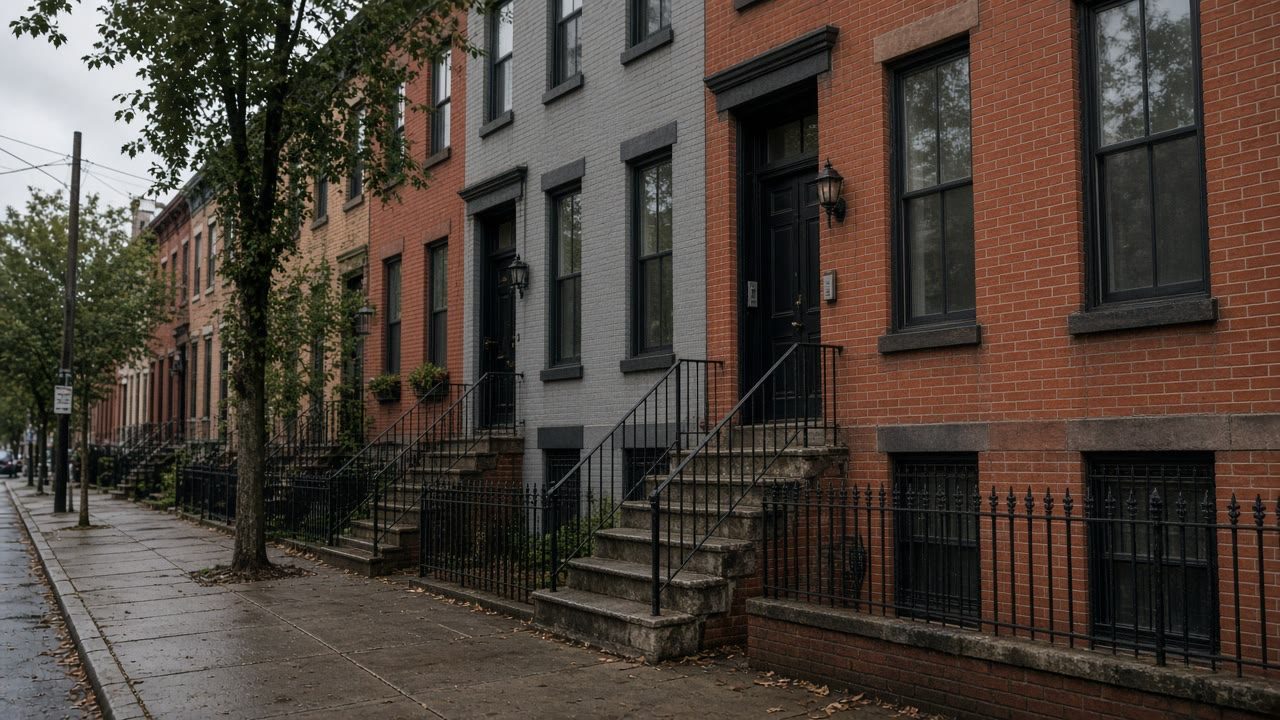
New Jersey residential leases carry an implied warranty of habitability, meaning the landlord has a duty to maintain the rental unit and keep it fit for residential purposes throughout the entire term of the lease and must repair damage to vital facilities.
Source: New Jersey Department of Community Affairs, Division of Codes and Standards, Habitability Bulletin, updated September 2022, accessed 2026-09-20
Of Hoboken's 28,088 occupied housing units, 18,607 are renter occupied and 9,481 are owner occupied, so about 66 percent of occupied homes in the city are rentals.
Source: U.S. Census Bureau, American Community Survey 2020-2024 5-year estimates, accessed 2026-09-20
The Department of Health tells renters plainly that because of the lack of mold regulations, government offices have little authority to cite building owners over mold contamination, and that renters should contact their local building code office about unrepaired building leaks, which those offices can address as structural deficiencies such as leaks and plumbing faults.
Source: New Jersey Department of Health, Consumer, Environmental and Occupational Health Service, accessed 2026-09-20
Before a New Jersey tenant may use repair and deduct, constructive eviction, rent abatement or rent withholding, three things must be true: the defect must be of a vital facility, the tenant must not have caused it, and the tenant must have notified the landlord and allowed adequate time to fix it. The state advises giving that notice in writing and sending it by a mail service that produces a return receipt.
Source: New Jersey Department of Community Affairs, Division of Codes and Standards, Habitability Bulletin, updated September 2022, accessed 2026-09-20
Marini v. Ireland, 56 N.J. 130, authorized the self help remedy of repair and deduct in New Jersey: a tenant may repair a vital facility deficiency and deduct the amount of the repair from the rent. The state bulletin sets no dollar cap on the deduction.
Source: New Jersey Department of Community Affairs, Division of Codes and Standards, Habitability Bulletin, updated September 2022, accessed 2026-09-20
All New Jersey buildings with three or more rental units must comply with the regulations for the Maintenance of Hotels and Multiple Dwellings and must be registered with the state Bureau of Housing Inspection, which is the enforcement agency for housing code violations in those buildings. One and two unit buildings do not fall under the Bureau's jurisdiction and, when not owner occupied, must instead register with the municipal clerk.
Source: New Jersey Department of Community Affairs, Division of Codes and Standards, Habitability Bulletin, updated September 2022, accessed 2026-09-20
In Hoboken, 372 housing units are in single family detached houses, 870 in single family attached houses and 959 in two unit buildings. The remaining 28,058 units, about 93 percent of the city's housing, sit in buildings of three or more units, including 10,445 in buildings of 50 units or more.
Source: U.S. Census Bureau, American Community Survey 2020-2024 5-year estimates, accessed 2026-09-20
The Bureau of Housing Inspection runs a tiered cyclical inspection schedule under P.L.2019 c.202: every seven years where no violations are found or all violations are abated by the first reinspection, every five years where all violations are abated by the second or third reinspection, and every two years where violations are still not abated after the third reinspection. Owners must also recertify their registration annually.
Source: New Jersey Department of Community Affairs, Bureau of Housing Inspection, accessed 2026-09-20
Hoboken has a municipal Rent Control Ordinance, Chapter 155, administered by a Rent Leveling and Stabilization Office that keeps files on all residential properties open to public inspection, and requires annual property registration from owners of single family homes, condominiums, multiple dwellings and mixed use buildings.
Source: City of Hoboken, accessed 2026-09-20
Senate bill S3995, introduced March 19, 2026 by a senator for District 31 in Hudson County and referred to the Senate Community and Urban Affairs Committee, would let a residential tenant pay rent into an escrow account, or make repairs and deduct up to four months of rent, when a serious hazard affecting habitability persists. The bill names mold first in its list of serious hazards. Its identical Assembly bill A5263 was introduced June 15, 2026 and referred to the Assembly Housing Committee. Neither has passed a committee as of September 20, 2026, so neither is law.
Source: New Jersey Legislature, Senate bill S3995 as introduced, accessed 2026-09-20
The Department of Health booklet says areas under about 10 square feet may be handled by a homeowner or building maintenance staff, areas over about 100 square feet call for a qualified contractor experienced in mold or environmental contamination cleanup, and a professional opinion should be sought for anything between the two.
Source: New Jersey Department of Health, Consumer, Environmental and Occupational Health Service, accessed 2026-09-20
Services this guide relates to
Need someone to look at it?
Send the details and we will come back to you.