
Why a Hoboken Basement Grows Mold When It Rains
Because one pipe under the street carries rain and sewage together, so a heavy downpour pushes water back up through the lowest opening in the building, which is usually a basement floor drain. That water is contaminated by definition, which is why wet drywall here is cut out rather than dried, and why the same basement grows mold again after the next storm.
Already know you need someone out? Call (315) 640-3590, answered 24/7.
The first 48 hours after water comes up the drain
Hour zero, stop adding to the main
Whoever is homeOne pipe carries household wastewater and street stormwater together here, so running showers and washing machines while the main is full sends more of it back through the lowest opening indoors.
The first hours, water out and contents up
You, or a drying contractorStanding water extracted, carpet and pad lifted, boxes off the slab. Absorbent material that has sat in drain water is not being saved, so the effort goes on everything that can still be dried.
First visit, settle the water category before anything dries
Whoever scopes the jobUnder the S500 standard, a backflow originating from beyond a trap is Category 3 regardless of visible content or color. That single determination decides whether drywall is dried or cut out.
Inside 24 to 48 hours, dry the material and not the surface
Air movement plus dehumidificationThe EPA states that material dried within 24 to 48 hours will in most cases not grow mold. A floor that looks dry is not the test; a meter reading inside the wall is.
Day three onward, it is a removal job now
A remediation contractorPast the window, wet porous material behind a finished wall becomes a containment and demolition scope. This is the point at which an independent assessment is worth having before any quote is written.
Afterwards, deal with the way the water gets in
You, the landlord or the boardThe City's own figure is that 0.8 inches of rain an hour overwhelms the system, so the same storm arrives again. A backwater valve, a working sump and a clear drain are the durable part of the job.
The category is decided on the first visit and the clock runs from the moment the water arrived. Everything expensive follows from those two.
One pipe carries the rain and the sewage together
The North Hudson Sewerage Authority names Hoboken, Union City, Weehawken and West New York as its combined sewer communities. In a combined system one pipe collects household wastewater and street stormwater together, and when rain exceeds what the treatment plants can take, the mixture is discharged to the Hudson River through an outfall. There are only three active outfalls inside Hoboken, at Fourth and River Streets, at Hudson and 11th Streets and at 15th Street on the river, all under one permit. Three relief points for a square mile of combined sewer is not many, so when the river end is tide locked and the rain keeps coming, the pressure looks for the next available opening. Indoors, the lowest opening is a basement floor drain. The storm and the backup are not two events. They are one event, and the water on your slab did not come through the roof.
It takes 0.8 inches of rain in an hour
The City of Hoboken states that its low lying topography and aging sewer infrastructure make it vulnerable to flooding, with as little as 0.8 inches of rain per hour overwhelming the system. That is an ordinary summer thunderstorm, not a hurricane and not something announced on the news two days ahead. The regional normals put it in context: Newark Liberty averages 46.25 inches of precipitation a year and 12.5 days with an inch or more. So a basement here can take water more than once in a season with nothing remarkable happening outside, which is why the drain deserves more attention than the roof, and why a backwater valve and a working sump are ordinary maintenance in this city rather than an upgrade. If your basement got wet on a Tuesday afternoon in July, nothing unusual happened.
The claims record says rainfall, not the river
Federal flood insurance records list 2,216 paid claims for Hoboken, totaling about 56.5 million dollars in building and contents payments, the largest claim history of any municipality around here. Of those claims, 1,486 are coded as accumulation of rainfall or snowmelt and only 344 as tidal water overflow. Two thirds rain, about one seventh tide. That ratio is the reason most advice written about water in this city is aimed at the wrong thing: people picture the harbor and the waterfront, while the water that actually reached their belongings came out of the street drainage during a downpour. When you ask about a building's history, ask what happens to it in heavy rain, not only what happened to it in a surge.
Ida was rain, Sandy was surge, and they are not the same lesson
Both are inside living memory here and they behaved completely differently. On September 1, 2021 Newark recorded 8.41 inches of rain, its all time wettest day, including 3.24 inches between 8 and 9 pm, the wettest hour ever recorded at the site, with totals exceeding the 500 year storm. No coastal surge was involved in any of that. During Superstorm Sandy in October 2012 the City records that 80 percent of Hoboken was flooded with an estimated 500 million gallons of coastal storm surge, many areas lost power for weeks, and private property damage passed 100 million dollars. If a building has not been opened up since 2012, there may be an old moisture history behind a finished wall that nobody has looked at since.
Why drain water gets demolished and clean water gets dried
This distinction decides your scope and your invoice, and it is the one thing generic basement advice never mentions. The ANSI/IICRC S500 standard defines Category 3 water as grossly contaminated water that can contain pathogenic, toxigenic or other harmful agents, and its examples include sewage and waste line backflows that originate from beyond any trap, regardless of visible content or color. Water that came up a floor drain is Category 3 by definition even when it looks clear. The Department of Health booklet states that where the water contained sewage or other hazardous substances, additional steps are required to assess, clean and decontaminate the area, and the EPA notes that absorbent or porous materials such as ceiling tiles and carpet may have to be thrown away because mold grows into their crevices. Drywall, insulation, carpet and pad leave the building rather than dry in place.
The clock that decides whether this becomes a mold problem
The EPA states that water damaged areas and items should be dried within 24 to 48 hours to prevent mold growth, and that where wet or damp materials are dried inside that window, in most cases mold will not grow. That is the most useful sentence a wet homeowner can read, because it is actionable within the hour and costs almost nothing. Get the standing water out, lift saturated carpet and pad, raise contents off the floor, and get real air movement with dehumidification rather than a fan pointed at a puddle. Do it that afternoon and there may be nothing left to remediate at all. Miss it by two days with wet insulation behind a finished wall and the drying job you had has quietly turned into a removal job.
The basement that grows mold with no leak at all
Not all of this is flooding. At Newark Liberty, the closest first order weather station to Hudson County, the NOAA hourly climate normal dew point on July 15 stays between about 62 and 64 degrees Fahrenheit for every hour of the day, and on August 15 it averages 63.2 degrees. Any basement surface colder than roughly 63 degrees will condense water straight out of ordinary July air with nothing leaking anywhere. If what you have is a fine even bloom on cool masonry, on cardboard boxes and on the back of furniture, rather than a stain spreading out from one point, you are looking at humidity. The answer is a dehumidifier with a drain line, a closed door and better air movement, not a contract. Hunting for a leak that does not exist is the commonest wasted month in this trade.
Two addresses six blocks apart, two different histories
Hoboken is one square mile and it is not one place. United States Geological Survey elevation data puts the ground at Jackson Street and Observer Highway in southwest Hoboken at about 4.3 feet above sea level, while Washington Street at First Street, six blocks east, is about 16.4 feet. Twelve feet of difference inside a short walk is why two buildings on the same street can have entirely different basement stories, and why advice pitched at the neighborhood level is close to useless here. Ask what the elevation is at the address, what the floor drain does in a downpour, and whether the building has a backwater valve. Those three answers tell you more about the risk than any general statement about the city ever will.
The pumps are real, and the work is not finished
Both halves of that sentence matter, and the copy that drops either half is selling something. The City reports that since 2016 the H1 pump in southwest Hoboken and the H5 pump in the northwest, with a combined capacity of about 90 million gallons a day, have prevented flooding during approximately 88 percent of rainstorms, and on April 24, 2025 five new submersible stormwater pumps went in at ResilienCity Park, able to move about 30 million gallons a day from a one million gallon tank beneath the park. The North Hudson Sewerage Authority was also the first wastewater authority in New Jersey to complete a combined sewer overflow Long Term Control Plan approved by the state, a 25 year program with construction on the Hoboken phases still underway, while Rebuild by Design Hudson River works on the surge side with structures continuing into 2027. Eighty eight percent still leaves roughly one storm in eight, surge protection is not drain protection, and a flood story from before 2025 is not a reliable guide to the same block today.
Sources used in this guide

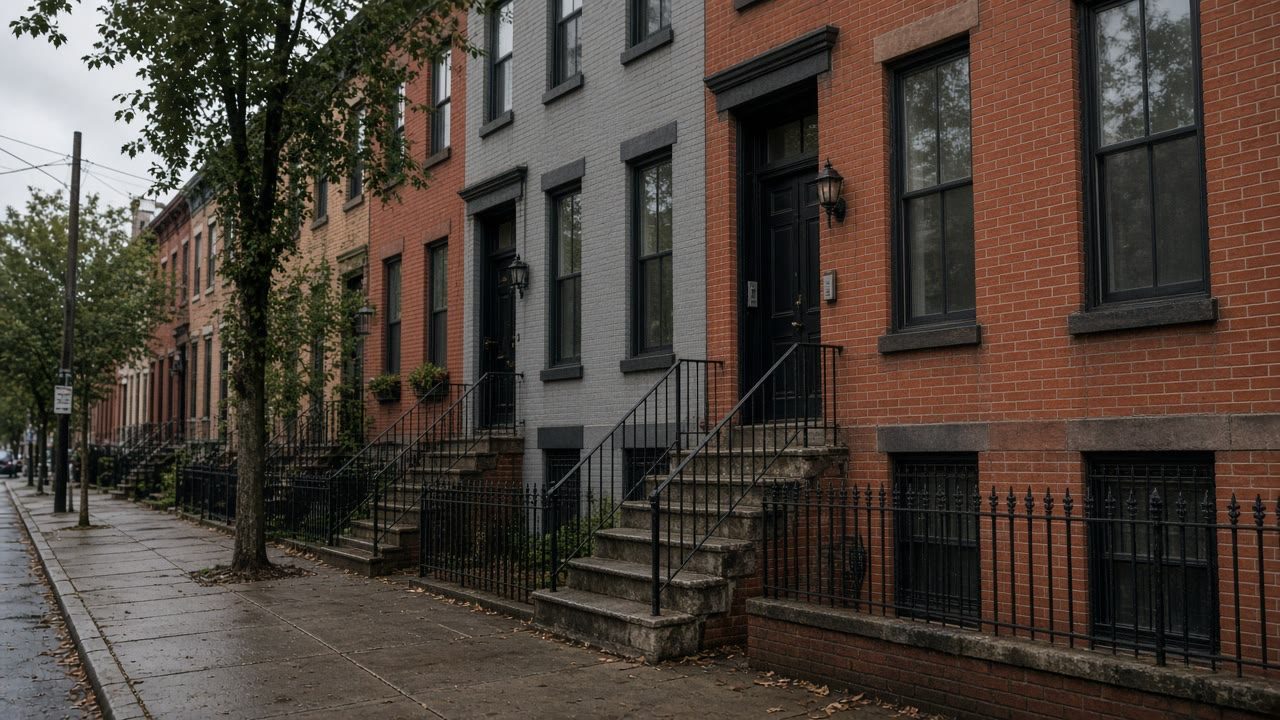
The North Hudson Sewerage Authority names Hoboken, Union City, Weehawken and West New York as its combined sewer communities. In a combined system one pipe carries household wastewater and street stormwater together, and when rain exceeds what the treatment plants can take, the mixture is discharged to the Hudson River.
Source: North Hudson Sewerage Authority, accessed 2026-09-20
The state environmental department's combined sewer outfall inventory lists three active outfalls inside Hoboken, at Fourth and River Streets, at Hudson and 11th Streets and at 15th Street on the Hudson River, all under the North Hudson Sewerage Authority Adams Street permit.
Source: New Jersey Department of Environmental Protection, NJPDES Combined Sewer Overflow data layer, accessed 2026-09-20
The City of Hoboken states that its low lying topography and aging sewer infrastructure make it vulnerable to flooding, with as little as 0.8 inches of rain per hour overwhelming the system.
Source: City of Hoboken, accessed 2026-09-20
The 1991-2020 annual climate normals for Newark Liberty give 46.25 inches of precipitation a year, 28.5 inches of snow, 12.5 days a year with an inch or more of precipitation, and 81.9 nights a year with a minimum temperature below 32 degrees Fahrenheit.
Source: NOAA National Centers for Environmental Information, 1991-2020 climate normals, accessed 2026-09-20
Federal flood insurance records list 2,216 paid claims for Hoboken, totaling about 56.5 million dollars in building and contents payments. The city's worst year was 2012 with 1,288 claims, followed by 2021 with 295 and 2011 with 267.
Source: Federal Emergency Management Agency, OpenFEMA FIMA NFIP Redacted Claims v2, data as of June 1, 2026, accessed 2026-09-20
Of Hoboken's 2,216 federal flood insurance claims, 1,486 are coded as accumulation of rainfall or snowmelt and only 344 as tidal water overflow.
Source: Federal Emergency Management Agency, OpenFEMA FIMA NFIP Redacted Claims v2, data as of June 1, 2026, accessed 2026-09-20
On September 1, 2021 Newark recorded 8.41 inches of rain, its all time wettest day, including 3.24 inches between 8 and 9 pm, the site's all time wettest hour on record. Its two hour total of 5.06 inches and six hour total of 7.88 inches were also records, and both Newark and Central Park saw amounts exceeding the 500 year storm.
Source: Northeast Regional Climate Center, Cornell University, accessed 2026-09-20
The City of Hoboken records that during Superstorm Sandy in October 2012, 80 percent of the city was flooded with an estimated 500 million gallons of coastal storm surge, many areas lost power for weeks, and more than 100 million dollars of private property damage and 10 million dollars of public property damage occurred.
Source: City of Hoboken, accessed 2026-09-20
The ANSI/IICRC S500 standard for professional water damage restoration defines Category 3 water as grossly contaminated water that can contain pathogenic, toxigenic or other harmful agents, and its examples include sewage and waste line backflows that originate from beyond any trap, regardless of visible content or color.
Source: ANSI/IICRC S500 Consensus Body position statement, March 16, 2026, accessed 2026-09-20
The Department of Health booklet states that if the water that caused the mold contained sewage or other hazardous substances, additional steps are required to assess, clean and decontaminate the area.
Source: New Jersey Department of Health, Consumer, Environmental and Occupational Health Service, accessed 2026-09-20
The EPA states that absorbent or porous materials such as ceiling tiles and carpet may have to be thrown away if they become moldy, because mold can grow into the empty spaces and crevices of porous material and may be difficult or impossible to remove completely.
Source: United States Environmental Protection Agency, accessed 2026-09-20
The EPA states that water damaged areas and items should be dried within 24 to 48 hours to prevent mold growth, and that if wet or damp materials are dried within 24 to 48 hours of a leak or spill, in most cases mold will not grow.
Source: United States Environmental Protection Agency, accessed 2026-09-20
At Newark Liberty International Airport, the closest first order weather station to Hudson County, the NOAA hourly climate normal dew point on July 15 stays between about 62 and 64 degrees Fahrenheit for every hour of the day, and on August 15 it averages 63.2 degrees.
Source: NOAA National Centers for Environmental Information, 1991-2020 hourly climate normals, accessed 2026-09-20
United States Geological Survey elevation data puts the ground at Jackson Street and Observer Highway in southwest Hoboken at about 4.3 feet above sea level, while Washington Street at First Street, six blocks east, is about 16.4 feet.
Source: United States Geological Survey, 3D Elevation Program point query service, accessed 2026-09-20
The City reports that since 2016 the H1 flood pump in southwest Hoboken and the H5 flood pump in northwest Hoboken, with a combined capacity of about 90 million gallons a day, have prevented flooding during approximately 88 percent of rainstorms.
Source: City of Hoboken, accessed 2026-09-20
On April 24, 2025 the City and the North Hudson Sewerage Authority announced the installation of five new submersible stormwater pumps at ResilienCity Park, able to move approximately 30 million gallons a day, about 20,000 gallons a minute, from the one million gallon storage tank beneath the park to the Hudson River during a storm.
Source: City of Hoboken, accessed 2026-09-20
The North Hudson Sewerage Authority is the first wastewater authority in New Jersey to complete its combined sewer overflow Long Term Control Plan and gain approval from the state environmental department. The plan is a 25 year program mandated by the state, and construction on its Hoboken phases is still underway.
Source: City of Hoboken, accessed 2026-09-20
The Rebuild by Design Hudson River project, led by the state environmental department with nearly 300 million dollars from the federal housing department, aims to protect Hoboken and parts of Jersey City and Weehawken from storm surge and to remove 80 percent of the city from the flood plain. Its sewer separation contract finished in July 2022 and construction on the resist structure and floodgates continues, with Harborside Park expected in 2027.
Source: City of Hoboken, accessed 2026-09-20
Services this guide relates to
Need someone to look at it?
Send the details and we will come back to you.